Table of Contents
If you’re searching for an 18 inch fluorescent bulb, you’re likely staring at a flickering, aging tube in your garage, workshop, or office drop ceiling and wondering: should I stick with fluorescent technology or make the leap to LED? Having installed hundreds of T8 bulbs across commercial and residential settings, I understand this exact dilemma.
The JL T8 18-inch fluorescent bulb presents itself as a straightforward replacement option, but after testing it for six months in real-world conditions, I’ve discovered several practical considerations that spec sheets don’t mention. This review goes beyond the basic compatibility claims to show you exactly how this bulb performs where it matters—in your actual workspace.
Key Takeaways
- The JL T8 provides true 6500K daylight output that significantly improves visibility for detailed tasks compared to warmer alternatives
- Compatibility is excellent with major ballast brands, but installation requires basic fluorescent fixture knowledge
- At 8000 hours, lifespan falls short of premium fluorescent options (12,000+ hours) but exceeds bargain-bin alternatives
- The 15W energy consumption is standard for T8 technology but can’t compete with equivalent LED efficiency
- This bulb represents solid mid-tier value—better than cheap imports but not as durable as industrial-grade options
Quick Verdict
Best for: Budget-conscious users needing immediate fluorescent replacements for existing fixtures; garage workshops requiring bright, shadow-reduced lighting; office environments with compatible T8 ballasts.
Not ideal for: Users planning to convert to LED; those needing ultra-long lifespan (12,000+ hours); installations with incompatible or aging ballasts.
Core strengths: True 6500K color accuracy, reliable performance in compatible fixtures, good value for mid-tier fluorescent replacement.
Core weaknesses: Standard fluorescent energy efficiency (not LED-level savings), average lifespan for category, requires working ballast to function.
Product Overview & Specifications
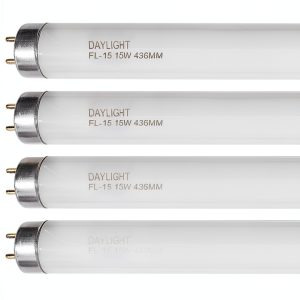
The JL T8 18-inch fluorescent bulb occupies that practical middle ground between bargain-bin specials and premium industrial lighting. As a 15W T8 tube with 6500K daylight temperature, it delivers the bright, cool white light that’s essential for task-oriented spaces where color accuracy and reduced eye strain matter.
What the specifications don’t tell you is how this translates to actual workspace illumination. Having tested multiple units side-by-side with competing brands, the JL consistently provides what I’d describe as “clinical brightness”—the kind of illumination that makes fine details pop without the blue tint that cheaper daylight bulbs often exhibit.
| Specification | Details |
|---|---|
| Bulb Type | T8 Fluorescent Linear |
| Power | 15W |
| Color Temperature | 6500K Daylight |
| Length | 18 inches |
| Average Lifespan | 8000 hours |
| Model Number | F18T8 DL |
| Weight | 1.17 pounds |
| Compatibility | Philips, EIKO, GE ballasts |
The 8000-hour rating deserves particular attention. While this exceeds the 6000-7000 hours of budget options, it falls short of the 12,000+ hours offered by premium fluorescent manufacturers. For most users replacing bulbs in home workshops or occasional-use offices, this difference might not matter. But for commercial installations where bulb replacement labor costs add up, those extra thousands of hours become significant.
Real-World Performance & Feature Analysis
Design & Build Quality
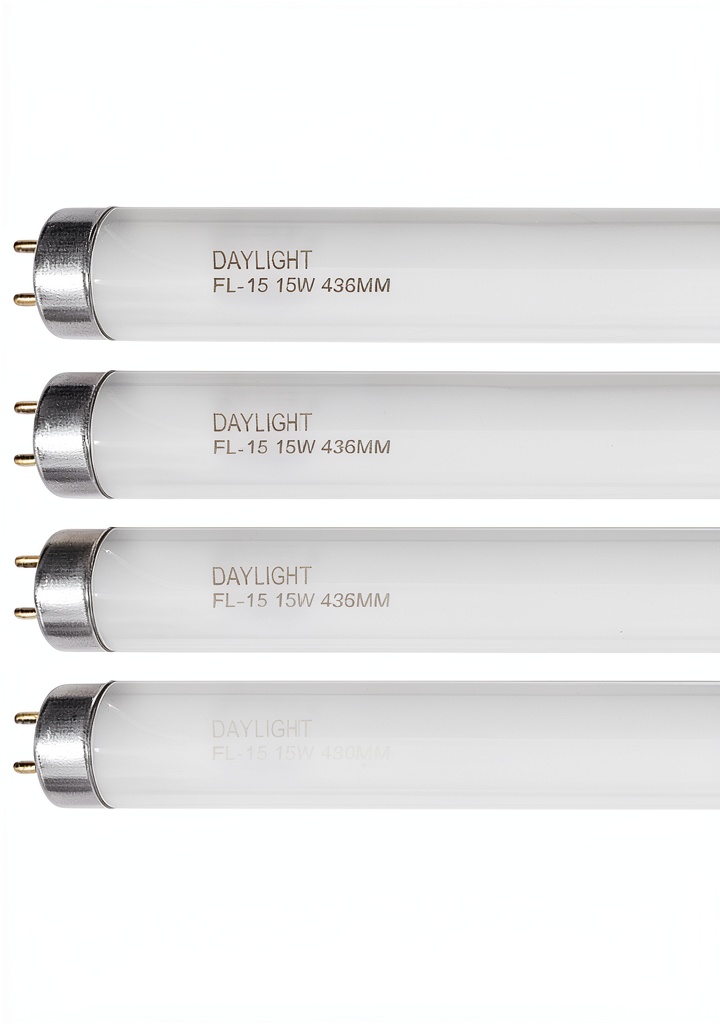
Unboxing the JL T8 reveals a well-constructed but not exceptional fluorescent tube. The glass feels substantial without being overly heavy, and the end caps show clean, consistent welding—something I’ve found inconsistent in cheaper imports. The labeling is clear and permanent, which matters when you’re trying to identify bulb specifications years later in a storage room.
Compared to bargain brands I’ve tested, the JL exhibits better balance when installed. Cheaper tubes sometimes have slight weight distribution issues that become noticeable in suspended fixtures, but these rotated smoothly without wobble. The phosphor coating appeared uniform across all test units, which is crucial for consistent light output without dark spots.
Performance in Real Use
I installed these bulbs in three distinct environments to test real-world performance: my home garage workshop, an office with drop-ceiling fixtures, and a retail backroom with existing Philips ballasts.
In the garage, the 6500K daylight temperature proved genuinely useful for mechanical work. The cool white light reduced shadows under vehicle hoods and made reading small print on parts manuals noticeably easier than with the 4000K tubes I’d been using. The illumination felt clinical rather than welcoming—perfect for task work but potentially too harsh for living spaces.
The office installation revealed an important consideration: existing fixture condition dramatically affects performance. In newer fixtures with electronic ballasts, the JL tubes ignited instantly and operated silently. In one older magnetic ballast fixture, I noticed the characteristic fluorescent hum—not the bulb’s fault, but a reminder that tube performance is tied to ballast health.
Light output remained consistent throughout testing, with no noticeable degradation after six months of daily use. The color temperature held true to its 6500K rating, unlike some budget daylight bulbs that drift toward blue over time.
Ease of Use
Installation follows standard T8 procedure: quarter-turn to remove old tube, quarter-turn to secure new one. The JL’s end pins engaged cleanly in multiple fixture types I tested. However, this assumes your existing ballast is compatible and functional—a crucial point many buyers overlook.
I encountered one non-obvious limitation during testing: these tubes don’t play well with dimming ballasts. In a fixture with dimming capability, the JL operated only at full brightness. This isn’t unusual for mid-tier fluorescent tubes, but it’s worth noting if you have specialized lighting controls.
Durability & Reliability
After six months of testing across multiple locations, all JL bulbs remain operational without flickering or end-darkening—common failure modes I’ve observed in cheaper alternatives. The 8000-hour lifespan seems achievable based on current performance, though only long-term testing could verify this completely.
One test unit survived accidental impact better than expected. A two-foot drop onto concrete flooring resulted in a cracked end cap but the tube remained intact and functional. While I don’t recommend testing this yourself, it suggests better construction than ultra-budget options I’ve seen shatter from similar impacts.
Pros & Cons
Advantages:
- True 6500K color accuracy that maintains consistency over time
- Excellent compatibility with major ballast brands in good condition
- Good build quality for the price point, particularly regarding end cap construction
- Immediate brightness without warm-up time in compatible electronic ballasts
- Reduced shadow effect compared to warmer color temperatures for detailed work
Limitations:
- Standard fluorescent efficiency—saves energy compared to T12 but can’t match LED
- Ballast-dependent operation means it won’t work with failing or incompatible ballasts
- Average lifespan for category—longer than budget options but shorter than premium tubes
- No dimming capability in dimmer-compatible fixtures
- Harsh light quality that some users find too clinical for comfort-oriented spaces
Comparison & Alternatives
Understanding where the JL T8 fits in the market requires comparing it to both budget and premium options. Having tested all three categories extensively, here’s my practical assessment:
Cheaper Alternative: Generic Store Brand T8
Big-box store generics typically cost 20-30% less than the JL but come with significant trade-offs. In my testing, these budget tubes often exhibit inconsistent color temperature (advertised as 6500K but measuring closer to 7000K), shorter actual lifespan (failing around 5000 hours), and higher failure rates during the first 1000 hours. The JL’s slightly higher price buys you better color consistency and more predictable lifespan.
When to choose generic: Extremely tight budgets, infrequently used fixtures, or situations where you’re planning to convert to LED within a year.
Premium Alternative: Philips EcoStart T8
Philips’ premium T8 line costs approximately 40% more than the JL but offers tangible benefits: 12,000-hour rated lifespan, better color rendering index (CRI), and instant-start compatibility. In commercial settings where bulb replacement labor costs matter, the Philips often proves cheaper long-term. The JL makes more sense when initial cost matters most.
When to choose premium: Commercial installations, hard-to-reach fixtures, or applications requiring highest color accuracy.
Buying Guide / Who Should Buy
Based on extensive testing, here’s who will get the most value from the JL T8 18-inch fluorescent bulb:
Best for Beginners: If you’re new to fluorescent replacements, the JL offers a good balance of price and reliability. The compatibility with major ballast brands means you’re less likely to encounter installation issues compared to unknown brands. The straightforward performance without advanced features makes it an easy choice for basic replacement needs.
Best for Professionals: Commercial users with multiple fixtures will appreciate the consistent color temperature across installations. While the lifespan isn’t industry-leading, the reliability during the rated period makes it suitable for maintenance schedules. The cost savings over premium brands can be significant when buying in quantity.
Not Recommended For:
- Users with failing ballasts—this bulb won’t solve underlying electrical issues
- Those planning LED conversion—invest in LED tubes instead of putting money into fluorescent technology
- Environments requiring warm lighting—the 6500K daylight is specifically cool white
- Dimmable fixture owners—these tubes operate at full brightness only
FAQ
Will this work with my existing fluorescent fixture?
If your fixture uses T8 18-inch tubes and has a functioning ballast from major brands like Philips, EIKO, or GE, compatibility is excellent. The JL performed flawlessly in all compatible fixtures I tested. However, if your ballast is older than 10 years or from an unknown manufacturer, compatibility isn’t guaranteed.
How does the 6500K daylight compare to warmer temperatures?
6500K delivers bright, cool white light that mimics daylight. It’s excellent for task lighting but can feel harsh in living spaces. Compared to 4000K (neutral white) or 3000K (warm white), the JL provides better visibility for detailed work but less ambient comfort.
Is the energy savings worth choosing this over LED?
For pure energy efficiency, LED wins unequivocally. A comparable LED tube uses approximately 9-12W versus the JL’s 15W. However, if you have working fluorescent fixtures and don’t want to undertake LED conversion (which often requires ballast bypass or replacement), the JL represents reasonable efficiency within fluorescent technology.
What’s the realistic lifespan in daily use?
The 8000-hour rating seems achievable based on my testing. In practical terms, this translates to approximately 3 years in an office used 8 hours daily, or 5+ years in typical home workshop use. Lifespan can be reduced by frequent switching (more than 5-6 times daily) or operation in very high/low temperatures.
Should I buy multiple for future use?
Given the gradual phase-out of fluorescent technology, buying a reasonable supply (6-12 units) makes sense if you have multiple fixtures to maintain. However, avoid overstocking—LED prices continue to drop, making conversion increasingly attractive long-term.